Data from the National Institute of Toxicology indicates that one in three rapes is carried out under chemical submission. In the last five years, 33% of sexual assault victims tested positive for drugs, alcohol, anxiolytics, or sedative medications.
Today, it is not an isolated incident to come across news about the detection of chemical substances in rape cases. Nowadays, it is very common to find traces of GHB in laboratory tests performed on individuals who report having suffered chemical submission, or who believe they were subjected to this situation.
In our line of work, over the years we have encountered many patients intoxicated by this substance, both voluntarily and involuntarily, since GHB—misleadingly referred to as liquid ecstasy—is a commonly used recreational drug. This powerful central nervous system depressant, which can initially produce a feeling of well-being and euphoria, has led us to handle numerous medical emergencies in nightlife environments.
After speaking with one of our nurses, he shared one of his experiences:
“We were treating a woman around 25 years old who reported alcohol consumption, but her symptoms were consistent with GHB intoxication, manifesting a hypotonic, hyporeflexic coma that resolved after a short time. The girl remembered absolutely nothing of what had happened during that temporary blackout. In this case, the support of her friends and reaching our medical service prevented the clinical situation from having a tragic outcome. It was clear that someone had attempted chemical submission for criminal purposes against her.”
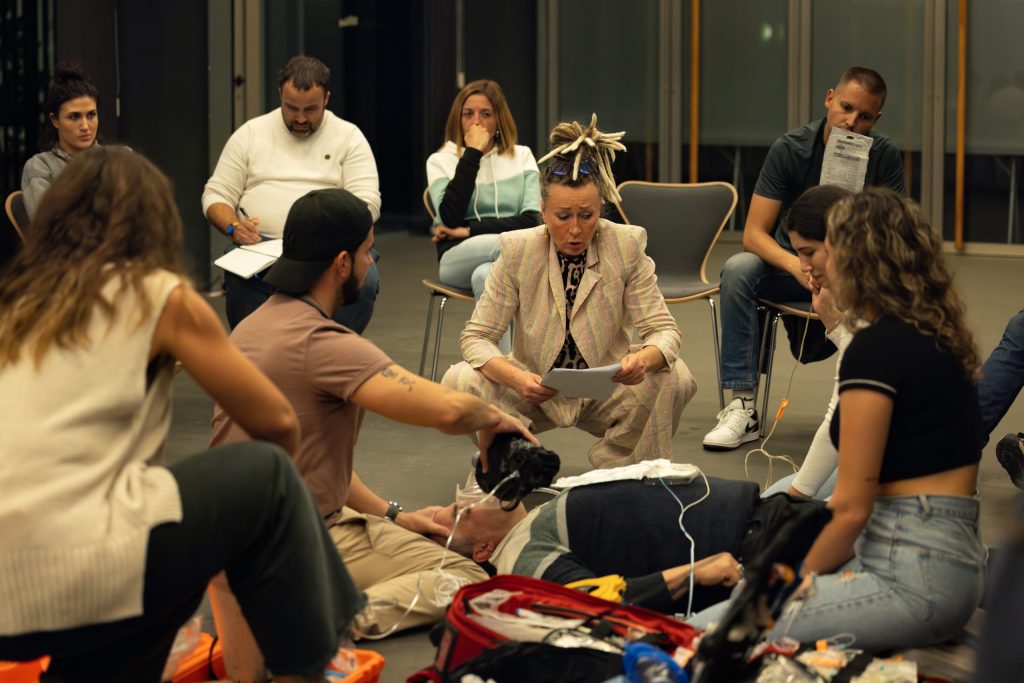
Our recommendation if assisting a person under the influence of GHB is: if you are in a nightlife venue, alert security staff so they can be attended to by the medical service. Importantly, place the person in the recovery position (lateral safety position) if their level of consciousness is low, and frequently reassess their breathing.