Drug intoxications represent a high percentage of admissions in emergency and urgent care services. The multi-pathology resulting from substance use and polysubstance use (often involving unknown substances and dosages) means that its management requires specific and comprehensive training to prevent and anticipate complications. A proper approach by the healthcare professional to drug poisoning is vital to understanding the situation and the severity of the intoxication, as well as detecting potential chemical submission, which in turn may uncover a sexual assault.
Acquiring knowledge and skills in the prevention, treatment, and guidance of intoxicated patients are some of the key objectives of healthcare personnel attending this accredited course. Other goals include improving the clinical management of patients arriving at care facilities intoxicated either by traditional drugs (alcohol, cocaine, MDMA, GHB, Ketamine, Amphetamines, etc.) or emerging substances (4-MMC, Methoxetamine, 4-Methylaminorex, 25i-NBOMe, etc.). Being able to recognize warning signs of intoxication using 3D psychodynamic profiles. Treatment of severe hyperthermia.
Primary Care healthcare professionals are also frequently drawn to this training as they occupy a strategic position to act in terms of prevention and risk reduction across:
- primary prevention: health education.
- secondary prevention: early detection of risk behaviors.
- tertiary prevention: collaborating in multidisciplinary treatment.
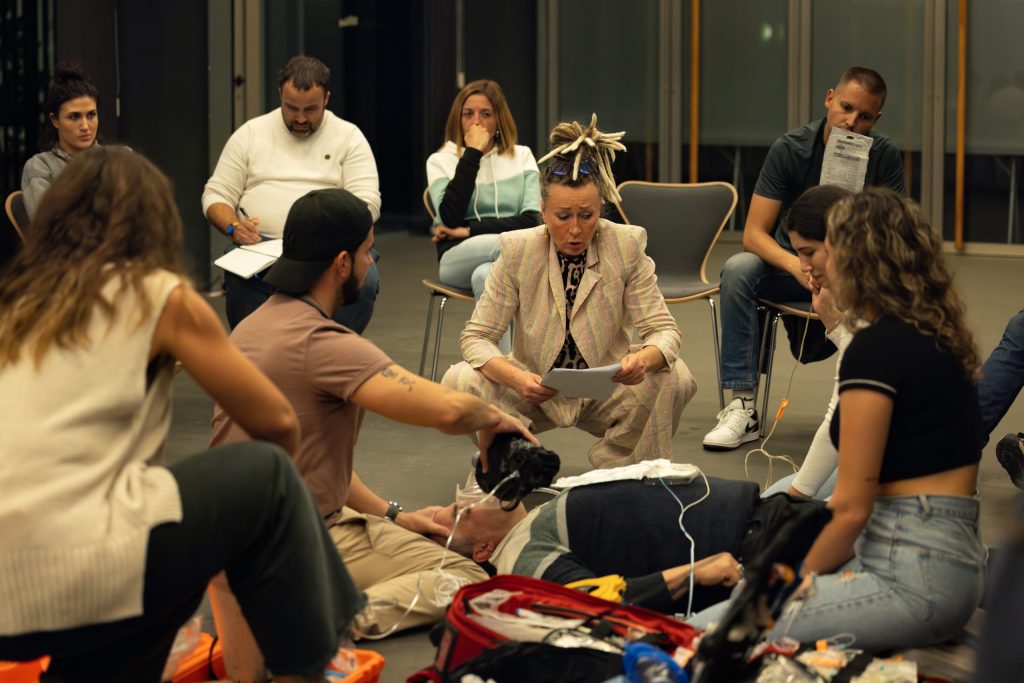
Case simulations or Role-Playing are a hallmark of all our training programs and are central to this course as well, enabling students to apply the knowledge acquired during training in urgent and preventive contexts of drug intoxications.
If you are interested in taking this accredited training, you can request more information from us. We adapt the training for closed groups of up to 30 students.