
01
01234567890
01234567890123456789012345678901234567890123456789012345678901234567890123456789012345678901234567890
%
National Day Against Violence Towards Healthcare Workers

Today, March 14th, marks the National Day Against Assaults on Healthcare Workers, a day dedicated to bringing visibility to this grave problem affecting healthcare personnel. Why is it commemorated today? Exactly 10 years ago today, family medicine resident María Eugenia Moreno was murdered in Murcia by a man dissatisfied with his care who returned armed […]

Tabla de contenidos

Today, March 14th, marks the National Day Against Assaults on Healthcare Workers, a day dedicated to bringing visibility to this grave problem affecting healthcare personnel. Why is it commemorated today? Exactly 10 years ago today, family medicine resident María Eugenia Moreno was murdered in Murcia by a man dissatisfied with his care who returned armed with a handgun and opened fire on her. This event shocked the medical community; yet despite annual commemorations and protest gatherings against this and other violent episodes over the past decade, this issue does not appear to have been addressed with the depth it deserves. Annual statistics show that assaults against healthcare personnel (both physical and verbal) continue to rise, with violent incidents recurring daily across healthcare facilities.

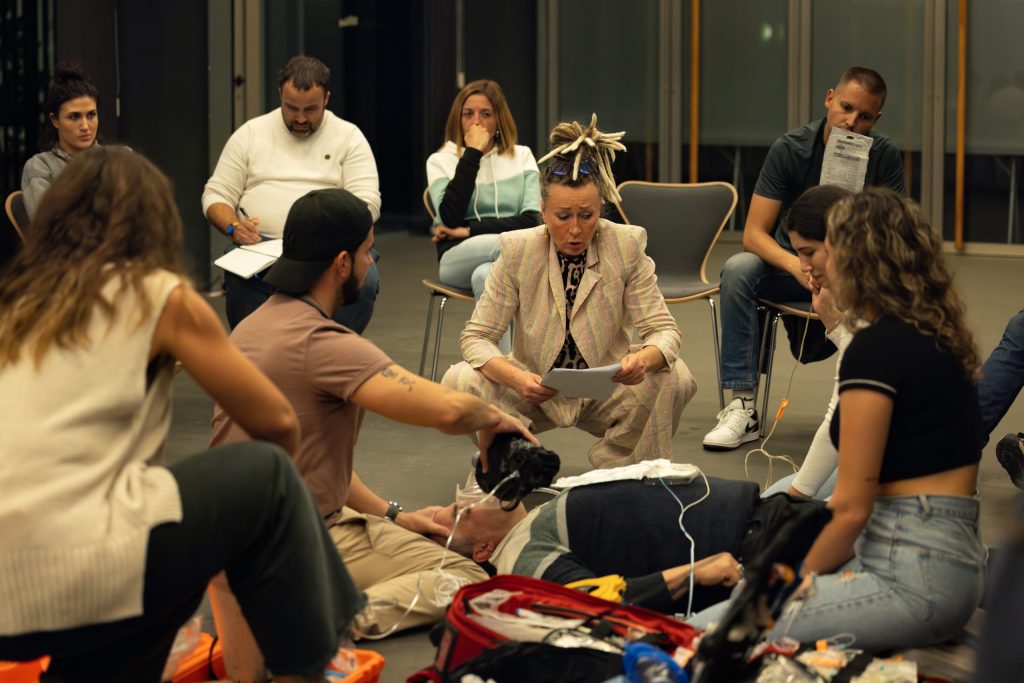
It could be argued that progress has been made regarding reactive measures—actions taken after an assault has occurred—and perhaps in containment measures such as hiring security personnel in clinics and hospitals. However, there is a clear lack of push for preventive measures: those necessary to prevent assaults from happening in the first place. Key among these are educating the public through awareness campaigns, and above all, training healthcare professionals to recognize warning signs preceding an assault, learn to de-escalate hostile situations, and learn how to flee and escape aggression using instinctive self-defense techniques. For such training to be effective, it must feature a distinct healthcare-oriented focus that enhances the inherent capabilities of medical staff while taking into account the specifics of their work across different departments. Implementing a training plan of this nature seems far more logical and coherent than commissioning basic self-defense mini-courses that ultimately prove completely useless when real danger strikes.

Assaults against healthcare staff, as against any other profession or group, represent a crushing social failure. As a society, it is unacceptable to attack the people who take care of our health.

¿Tu equipo está preparado para actuar con éxito?

En el sector del ocio, la formación continua es la mejor herramienta de prevención.

Si quieres elevar los estándares de protección de tu establecimiento o recibir más información sobre nuestras jornadas de concienciación, contacta con nosotros hoy mismo y construyamos juntos un entorno más seguro.

Your cart is currently empty.

Return to shop