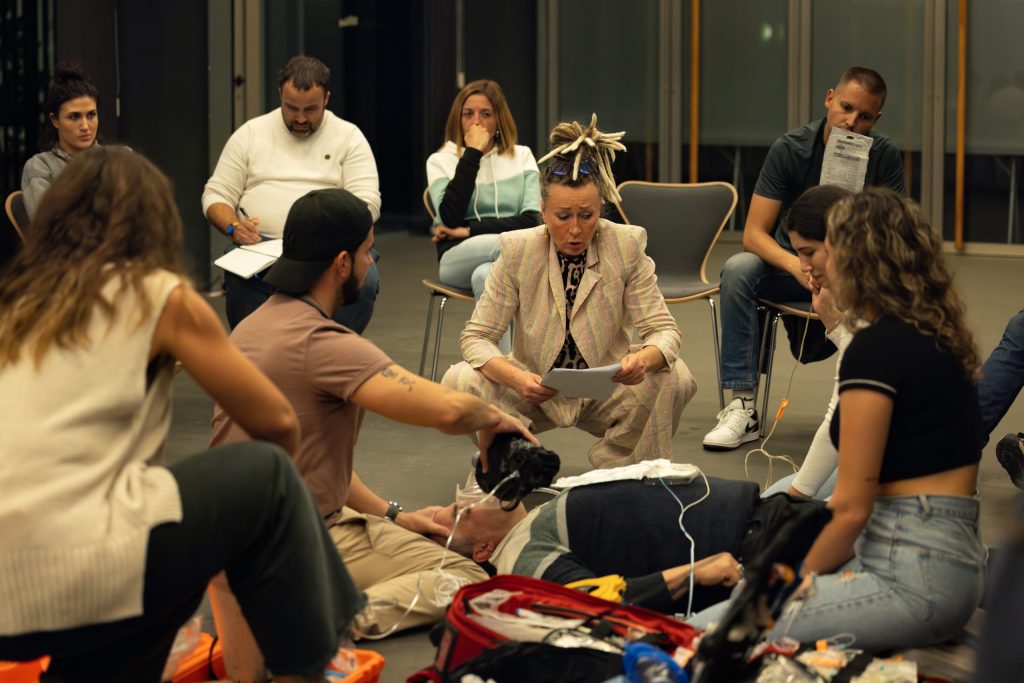


Victims involved in environments of ACCIDENTS, FIRES, STRUCTURAL COLLAPSE, HAZARDOUS MATERIALS, or POLYTRAUMA PATIENTS are individuals who, in many cases, require a multidisciplinary response (Firefighters-Healthcare Workers) to provide them with quality medical assistance. Therefore, providing help becomes essential, but never forgetting that our intervention must be carried out within a safety framework for both responders and the victim themselves.
But what should we keep in mind during multidisciplinary care?
- Do not move on to the next level without having resolved the previous one.
- The absence of a carotid pulse requires starting CPR maneuvers.
- It may be necessary to establish IV access prior to ‘C’ to administer medications (e.g., for ETT/IOT).
- Hemorrhage is the most common cause of shock in polytrauma patients.
- Definitive treatment of shock is hospital-based.
- Aggressive volume resuscitation should not be performed.
- Young individuals may not show tachycardia or hypotension until losing 30% of blood volume.
- Evidence is sparse for the use of corticosteroids in acute spinal cord injury.
- Never forget to always provide analgesia and sedate if necessary.
- Reassess.